
Ratio logo white

Ratio is an interdisciplinary research institute, with a research focus on the conditions of business and enterprise.

08-441 59 00info@ratio.se

802002-5212

Sveavägen 59 4trp

11359 Stockholm

Bankgiro: 512-6578

PublicationsSeminarsPeople

Popular

News archive
Publications
Seminars
People
Start
About
Contact us
Labour market research
Competitiveness research
Climate and environmental research
PublicationBook chapter

1980-talets avreglering – en kort paus mellan beredskapsplaner och EU

Abstract

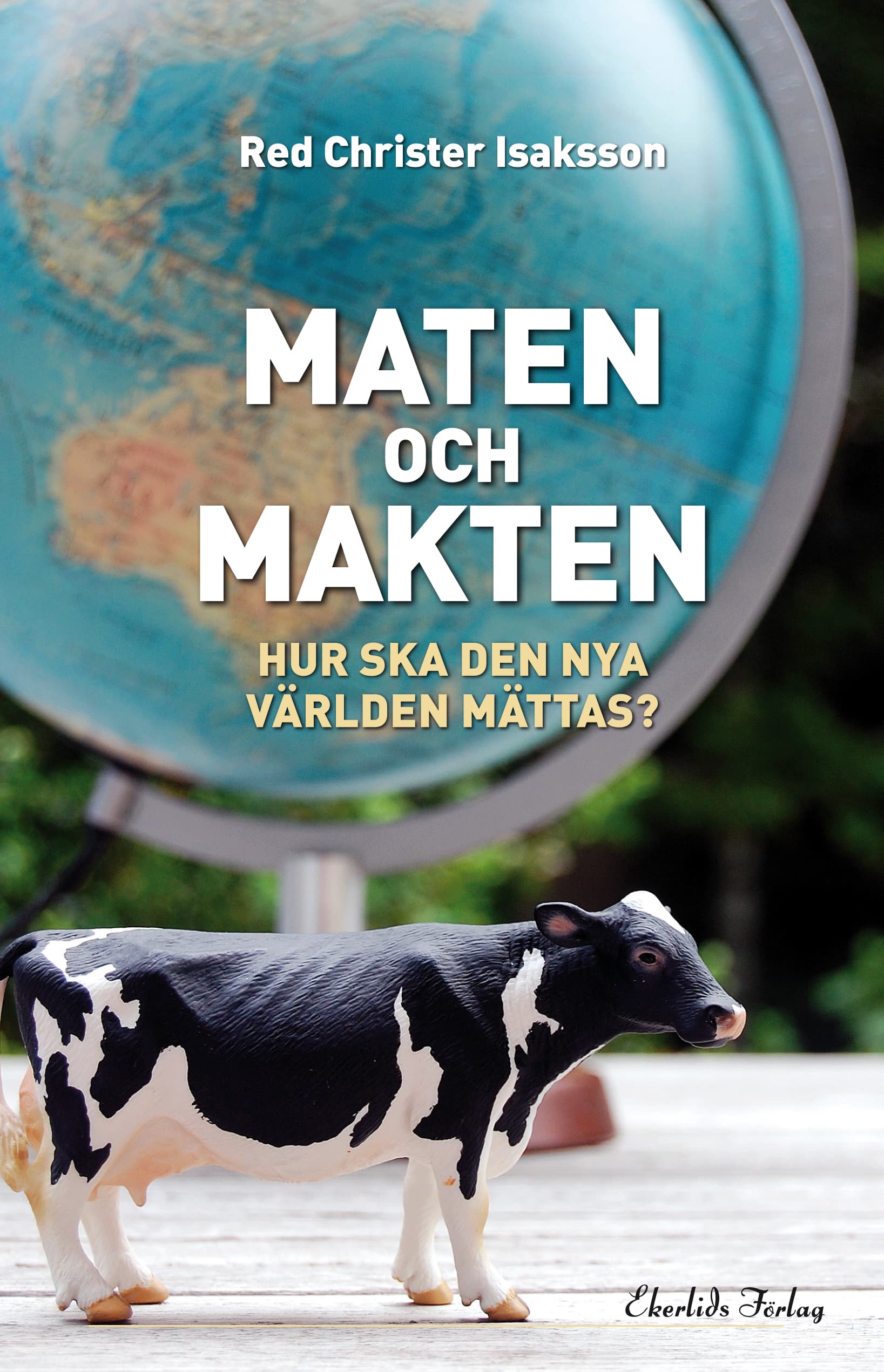
Svenska kockar blir tevekändisar och gör internationell succé samtidigt som bönderna blir allt färre. Konsumenterna ställer allt högre – och mer högljudda – krav på att maten ska vara klimatsmart och miljövänlig, och att djuren i produktionen ska ha det bra. Samtidigt styr priset i hög grad våra köpbeslut och allt färre känner till var maten de äter kommer ifrån. Matlandet Sverige är alliansregeringens mest lyckade pr-satsning, men bakom talet om småskaligt och närproducerat håller svenskt jordbruk på att monteras ner. Parallellt med att världens efterfrågan på mat och resurser exploderar i takt med en växande medelklass förbereder sig den siste mjölkbonden på att släcka ljuset i ladugården 2020. Vilka blir följderna av att Sverige ställer sig utanför den globala matproduktionen? Hur kunde det bli så här? Och hur kunde svenskt jordbruk bli en politisk icke-fråga? Frågorna besvaras i boken av Göran Persson, Christel Benfalk, Lennart Båge, Henrik Lindberg, Helena Jonsson, Gun Rundquist, Roger Tiefensee, Harald Svensson, Matilda Ernkrans, Stefan de Vylder, Bengt-Anders Johansson, Kew Nordqvist, Jonas Carlberg och Christer Isaksson, som också är redaktör för boken.

Lindberg, H. (2012). “1980-talets avreglering – en kort paus mellan beredskapsplaner och EU.” In Isaksson, C. (Eds.), Maten och makten: hur ska den nya världen mättas? Stockholm: Ekerlids Förlag.
Details

Author
Lindberg, H.
Publication year
2012
Published in

Maten och makten

Related

  • Associate Researcher

    Henrik Malm Lindberg

    0768587956 henrik.lindberg@ratio.se

Similar content

Article (with peer review)

Reviewing the EU policy nexus of energy efficiency and social policy

Nordensvard, J., Björklund, M., von Malmborg, F., La Fleur, L., Skogsmo, E., & Gamez, D. H. B.
Download

Publication year

2025

Published in

Renewable and Sustainable Energy Reviews

Abstract

This paper aims to analyse how the European Union (EU) energy policy has merged social policy concepts with energy efficiency policy. Energy efficiency has increasingly become understood through social policy concepts such as energy poverty, energy inequality, and lack of cohesion. Previous research has shown how the social aspects of energy efficiency have been highlighted by the European Commission when discussing the multiple benefits of increased energy efficiency efforts, such as building renovations.

Using a mixed-method approach with material from the European Commission, the Council of the European Union, and the European Parliament, we review energy policy from a social policy perspective. The analysis is conducted in two steps. First, we identify which EU institutions acted as agenda-setters in introducing the social aspects of energy efficiency. Second, we describe and analyse the framing process through which social concepts are merged with energy policy.

The study combines qualitative and quantitative analyses of EU policy documents. A set of key words is used in the quantitative analysis to explore the links between social policy and energy policy.

We conclude that social aspects were first connected to the energy policy field by the European Parliament. This connection was later reinforced by the European Commission through the inclusion of social policy elements, particularly in policies addressing the transition to energy efficiency and zero-carbon buildings, where concepts such as energy poverty have become central.

Working paper

Ratio Working Paper No. 350: A quickly transforming labour market

Uddén Sonnegård, E.
Download

Publication year

2021

Published in

Ratio Working Paper

Abstract

The Covid-19 pandemic has made it clear that the labour market situation can change
extremely rapidly when there is an unexpected exogenous shock to the economy. Even
though the transformation of the labour market as a result of the development of ICT
(Information Communication Technology) industries facilitates more-flexible
conditions, it is now more important than ever for EU Member States to improve the
functioning of their labour markets. Member States need to increase possibilities for
training and retraining throughout peoples’ working lives in order to smooth the
transformation into a digital world of work.

Article (without peer review)

Public Choice and Statecraft in the Euro Crisis

Karlson, N.

Publication year

2021

Published in

The Library of Economics and Liberty

Abstract

Show more
Swedish flag iconPå svenska