Ratio light logo

Ratio är ett fristående forskningsinstitut som forskar om företagandets villkor.

08-441 59 00info@ratio.se

802002-5212

Sveavägen 59 4trp

11359 Stockholm

Bankgiro: 512-6578

PublikationerEvenemangMedarbetare

Populärt

Unga forskare
Nyhetsarkiv
Publikationer
Evenemang
Medarbetare
Start
Publikationer
Forskning i korthet
Rapportserie arbetsmarknad
Arbetsmarknad
Klimat och miljö
Konkurrenskraft
Projekt
Evenemang
RatioTV
Ratio dialogue
Detta är Ratio
VD berättar
Styrelse
Ledning
Verksamhetsberättelse
Medarbetare
Forska hos oss
Kontakta oss
Om programmet
Stipendium för unga forskare
Praktik
Sommarassistent på Ratio
Eli F. Heckscher-föreläsning
AI-Econ Lab
Bli medlem
Press & media
Nyhetsbrev
Nyhetsarkiv
Vanliga frågor
Integritetspolicy
Engelska flaggan ikonIn English
PublikationBok

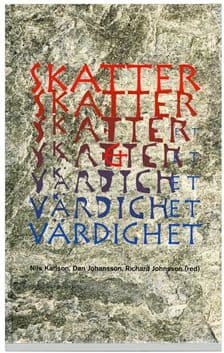
Skatter och värdighet

Sammanfattning

Vilka är skatternas allvarligaste effekter? Är dagens skattenivå rimlig i ett ekonomiskt och normativt perspektiv? Om inte, vad bör i så fall göras åt saken? Dessa frågor utgör utgångspunkten för den tvärvetenskapliga antologin Skatter och värdighet.

Den ena huvudtesen är att skatterna motverkar arbetsdelning och sysselsättning. Annorlunda uttryckt gör skatterna att vi jobbar osmart. Allt fler av oss sysslar med fel saker. Dessutom utestängs väldigt många i arbetsför ålder från arbetsmarknaden.

Den andra huvudtesen är att skatternas konsekvenser utgör ett hot mot människors värdighet. Att kunna försörja sig själv och sina närmaste är en central del i ett värdigt liv. När skatter minskar förutsättningarna för sysselsättning, företagande, sparande och tillväxt undergrävs den enskildes värdighet.

I Skatter och värdighet analyseras skatters normativa legitimitet, skatternas och den offentliga sektorns historiska utveckling, skatternas effekter på den enskildes komparativa fördelar, effektivitetsproblem med höga skatter, skattekilar på hushållsnära tjänster samt förmögenhets-skattens konsekvenser.

Dessutom presenteras ett antal konkreta förslag på hur förutsättningarna för arbete, företagande och värdighet snabbt och enkelt skulle kunna förbättras genom rejält sänkta skatter. Effekterna är dramatiskt positiva.

Karlson, N., Johansson, D. & Johnsson, R. (red.) (2004). Skatter och värdighet. Stockholm: Ratio.

Följande forskare medverkar:
Åsa Hansson
Dan Johansson
Richard Johnsson
Nils Karlson
Erik Moberg
Lars Niklasson
Anne-Marie Pålsson och
Gunnar Du Rietz.

Redaktörer: Docent Nils Karlson, vd för Ratio. Fil dr Dan Johansson, forskare vid Ratio. Fil dr Richard Johnsson, forskare vid Ratio.

Detaljer

Författare
Karlson, N., Johansson, D. & Johnsson, R.
Publiceringsår
2004
Publicerat i

Skatter och värdighet

Relaterat

  • Bild av Nils Karlson, medarbetare på Ratio
    Professor & grundare Ratio

    Nils Karlson

    +46708670351nils.karlson@ratio.se

Liknande innehåll

Working paper

Ratio Working Paper No. 390: Fighting Populism by Rethinking Welfare

Karlson, N.
Ladda ner

Publiceringsår

2026

Publicerat i

Ratio Working Paper Series.

Sammanfattning

Populism thrives on discontent. It could be anything from migration and xenophobia to globalization and welfare failures. Populists deliberately use such discontent to promote polarization by demonizing opponents and attacking media, established elites, courts etc. in the name of the “true people”. As a consequence, democracy, the rule of law, and sound social and economic policies are undermined, with long-term disastrous effects. In many cases, however, the original discontent is caused by real policy failures that have not been properly solved. A major strategy for fighting back at the populist threats therefore must be to improve policy. This paper focuses on the policy failures of welfare states, a major source of discontent in many democracies. I argue that the concept of welfare has been captured and misinterpreted into government assistance programs, a presumption that needs to be abandoned and replaced by interpreting welfare as human flourishing, something that primarily can be promoted within markets and civil society, supported by a small, limited, and decent state.

Artikel (med peer review)

Does Access to Housing Wealth Relax Liquidity Constraints for Entrepreneurs? Evidence from Sweden

Hansson, Å.

Publiceringsår

2026

Publicerat i

Nordic Journal of Surveying and Real Estate Research, 19(1)

Sammanfattning

Liquidity constraints are often seen as a barrier to entrepreneurship, with many relying on personal or informal capital to start a business. This paper examines whether increased access to equity — via rising value of owner-occupied housing — affects the likelihood of business entry. Using detailed Swedish tax return data and exploiting the 2008 property tax reform as a natural experiment, we analyze how changes in house prices influence entrepreneurial activity. While higher housing prices correlate with business ownership and entry, this relationship disappears when isolating the causal effect of the tax reform. These findings contrast earlier findings and suggest that the value of owner-occupied housing proxy for individual characteristics rather than easing liquidity constraints, indicating that such constraints are not a major barrier to entrepreneurship in Sweden.

Artikel (med peer review)

Insider activism in the forest industry: An emerging phenomenon?

Grafström, J., & Karlson, N.

Publiceringsår

2026

Publicerat i

Forest Policy and Economics, 185, 103732

Sammanfattning

Insider activism refers to situations where public officials use administrative discretion to advance personal or ideological preferences. Although the concept has received increasing attention in organizational and political science research, empirical evidence remains limited. This research note examines whether insider activism may influence regulatory practice in the Swedish forestry sector and how perceived enforcement uncertainty affects forest owners’ behavior. A survey of forest owner representatives in southern Sweden indicates low trust in regulatory objectivity and weak perceptions of legal security. Many respondents report experiences of officials acting beyond their formal mandate. The findings suggest that perceived activism-driven uncertainty encourages defensive strategies among forest owners, including early harvesting and reduced willingness to report environmental values.

Visa fler