Ratio light logo

Ratio är ett fristående forskningsinstitut som forskar om företagandets villkor.

08-441 59 00info@ratio.se

802002-5212

Sveavägen 59 4trp

11359 Stockholm

Bankgiro: 512-6578

PublikationerEvenemangMedarbetare

Populärt

Unga forskare
Nyhetsarkiv
Publikationer
Evenemang
Medarbetare
Start
Publikationer
Forskning i korthet
Rapportserie arbetsmarknad
Arbetsmarknad
Klimat och miljö
Konkurrenskraft
Projekt
Evenemang
RatioTV
Ratio dialogue
Detta är Ratio
VD berättar
Styrelse
Ledning
Verksamhetsberättelse
Medarbetare
Forska hos oss
Kontakta oss
Om programmet
Stipendium för unga forskare
Praktik
Sommarassistent på Ratio
Eli F. Heckscher-föreläsning
AI-Econ Lab
Bli medlem
Press & media
Nyhetsbrev
Nyhetsarkiv
Vanliga frågor
Integritetspolicy
Engelska flaggan ikonIn English
PublikationWorking paper

Working Paper No. 385 The workload paradox: Will AI reduce academic labor?

Ladda ner PDF

Sammanfattning

Artificial intelligence is reshaping academia, but instead of liberating scholars, AI might keep them running faster just to stay in place. This paper theoretically explores how AI increases institutional expectations rather than reducing workload. Using a formal workload model, the study examines how automation affects academic tasks, revealing that while AI streamlines some processes, it also creates new responsibilities in research, publishing, and administration. A case study illustrates how scholars experience rising pressures to verify AI-generated work, adapt to changing publication norms, and meet intensifying institutional demands. The findings suggest that AI’s role in academia is not one only of simplification, but acceleration—a race where efficiency gains are quickly absorbed, where the pursuit of academic excellence becomes ever more demanding, and where scholars must continuously push forward, not to advance, but merely to avoid falling behind.

Detaljer

Författare
Jonas Grafström
Publiceringsår
2025
Publicerat i

Ratio Working Paper Series.

Relaterat

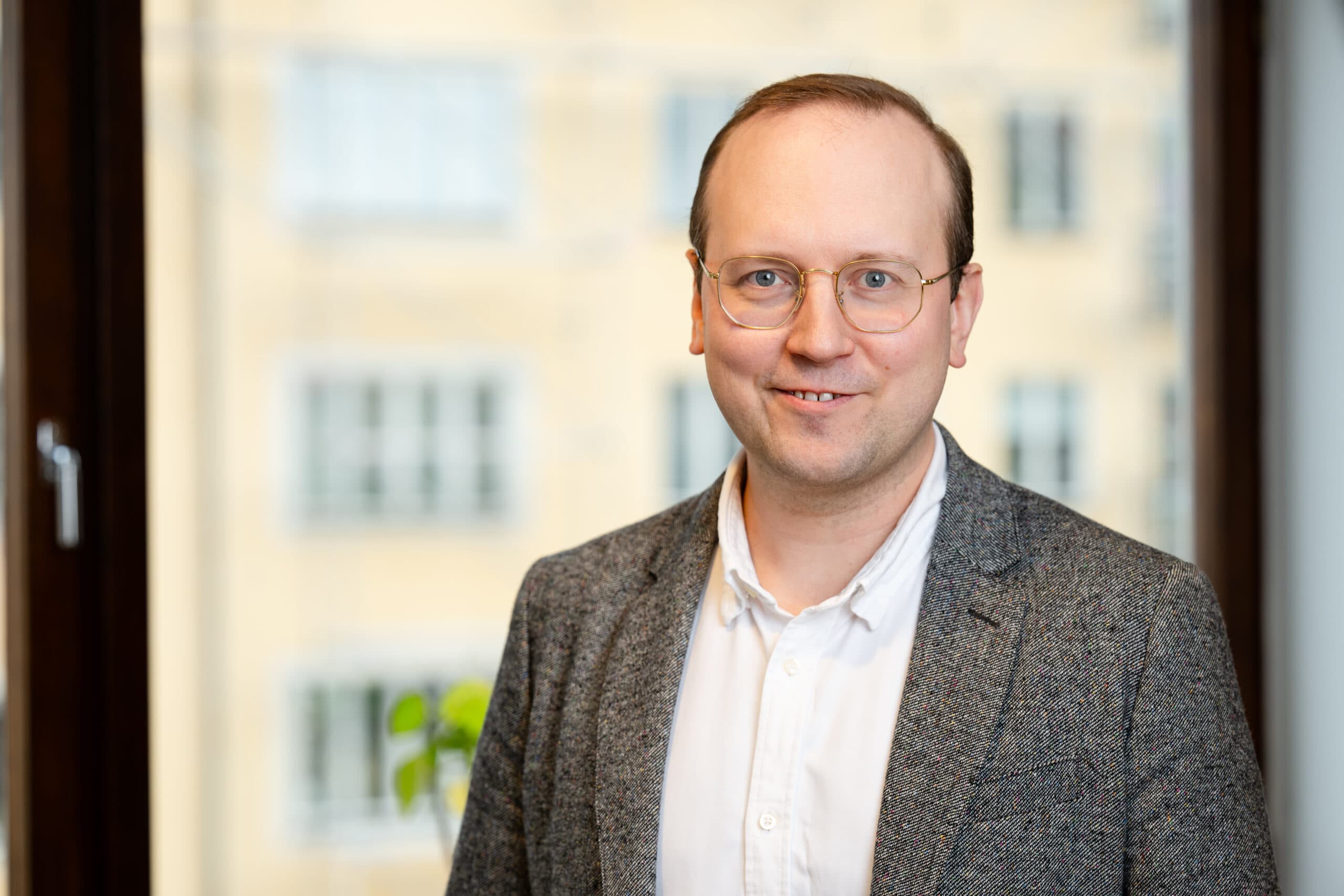
  • Bild av Jonas Grafström, medarbetare på Ratio
    Filosofie doktor och vice vd

    Jonas Grafström

    0703475854jonas.grafstrom@ratio.se

Liknande innehåll

Artikel (med peer review)

A transition probability analysis of material flows in the European aggregates industry

Grafström, J., & Rydén, S.

Publiceringsår

2026

Publicerat i

Construction Management and Economics, 1–14

Sammanfattning

Recycled aggregates materials are often relegated to downcycled applications such as backfilling. Different barriers limit their reintegration into higher-value construction use. This paper develops a probabilistic model of material flows using a Markov chain framework to simulate transitions between four states: Input, Use/Waste, Recycling, and Disposal. The model draws on Eurostat data covering non-metallic minerals in 27 EU Member States (2014–2023) and incorporates barrier-adjusted transition probabilities reflecting economic, technological, institutional, and social constraints. Scenario simulations reveal that improvements in recycling probabilities can yield nonlinear gains in material retention. However, once structural barriers are introduced, system performance declines sharply—even under favourable technical assumptions. The results suggest that modest policy interventions may have outsized effects if targeted toward key transition points.

Artikel (med peer review)

Insider activism in the forest industry: An emerging phenomenon?

Grafström, J., & Karlson, N.

Publiceringsår

2026

Publicerat i

Forest Policy and Economics, 185, 103732

Sammanfattning

Insider activism refers to situations where public officials use administrative discretion to advance personal or ideological preferences. Although the concept has received increasing attention in organizational and political science research, empirical evidence remains limited. This research note examines whether insider activism may influence regulatory practice in the Swedish forestry sector and how perceived enforcement uncertainty affects forest owners’ behavior. A survey of forest owner representatives in southern Sweden indicates low trust in regulatory objectivity and weak perceptions of legal security. Many respondents report experiences of officials acting beyond their formal mandate. The findings suggest that perceived activism-driven uncertainty encourages defensive strategies among forest owners, including early harvesting and reduced willingness to report environmental values.

Artikel (med peer review)

Time as a structural barrier for a circular economy

Grafström, J.

Publiceringsår

2026

Publicerat i

Journal of Industrial Ecology, 1–13

Sammanfattning

Circular economy debates often acknowledge material lifespans and delays, but time is usually treated as a contextual issue rather than a structural barrier. The contribution is to reframe circular economy transitions as intertemporal processes by treating time as an endogenous structural barrier. A framework is developed that classifies goods into short-, medium-, and long-lived categories, demonstrating how lagged inflows and valuation biases suppress aggregate circularity even when technology improves. By making temporal mechanisms explicit, the analysis explains why indicators remain stagnant despite policy and efficiency gains. The contribution is to introduce time as an endogenous barrier, integrating insights from environmental and resource economics into circular economy theory and showing how delayed substitution shapes both firm investment and policy outcomes.

Visa fler